




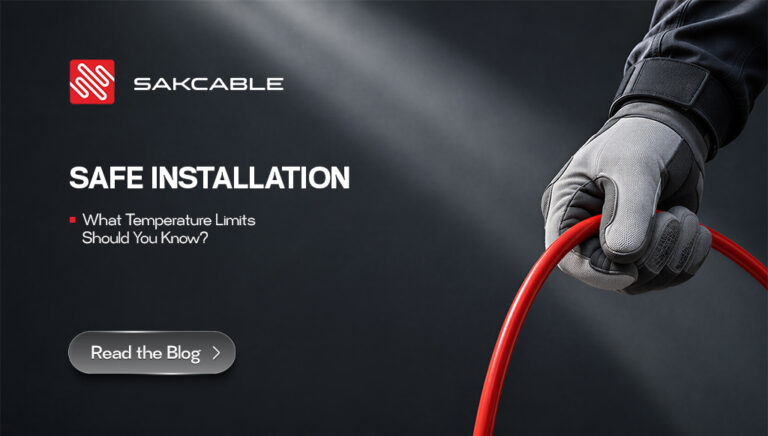
Cold temperatures can affect cable performance, flexibility, and durability. Understanding the difference between minimum installation and operating temperatures is essential for safe installation and long-term reliability.
Why Does Temperature Matter?
When exposed to low temperatures, cable insulation and sheath materials can become stiffer and less flexible. Bending, pulling, or handling cables under unsuitable conditions can cause cracking or damage, potentially affecting their performance and service life.
However, not all cables react to cold temperatures in the same way. Their resistance depends on the materials used, cable construction, and environmental conditions.
Installation Temperature vs. Operating Temperature
Although closely related, these two temperature limits serve different purposes.
Minimum Installation Temperature refers to the lowest temperature at which a cable can safely be handled, bent, pulled, and installed without damaging its insulation or sheath.
Minimum Operating Temperature refers to the lowest temperature at which a cable can safely remain in service after installation, under the conditions specified by its manufacturer.
For example, a cable may be suitable for operation at -15°C but require a temperature of 0°C or higher during installation. This is because installation involves mechanical stress, while a cable in fixed operation generally remains stationary.
How Do Temperature Limits Differ by Cable Material?
The minimum temperatures depend on the cable type and its insulation and sheath materials.
As an example, Sakcable’s technical guidance provides the following temperature recommendations for selected cable constructions:
| Sheath material | Minimum installation | Minimum operating |
| PVC | 0°C | -15°C |
| LSOH (Low Smoke Zero Halogen) | -15°C | -25°C |
These figures are examples from Sakcable’s technical guidance, not universal ratings. The guidance includes additional storage and installation conditions. Always follow the applicable cable standard and manufacturer’s technical datasheet.
What Should You Check Before Installing Cables in Cold Weather?
The surrounding air temperature is not the only factor to consider. A cable’s actual temperature also depends on how and where it has been stored.
Before installation, consider:
Storage conditions: Cables stored outdoors may remain cold even after the surrounding temperature increases.
Cable size and mass: Large cable drums may require more time to reach a suitable installation temperature.
Handling and bending: Pulling tension, bending speed, and bending radius can increase the risk of damage in cold conditions.
Manufacturer specifications: Always verify the permitted installation temperature for the specific cable.
Conclusion
Understanding the difference between minimum installation and operating temperatures helps prevent cable damage and supports reliable electrical installations.
A cable that can safely operate in cold conditions is not necessarily suitable for installation at the same temperature.
At Sakcable, we encourage installers, engineers, and project managers to check cable specifications and environmental conditions before installation to ensure safety, performance, and long-term reliability.